Industry

Fashion, Footwear, and Apparel Technology

Client

Material Exchange • B2B SaaS Platform

Sourcing Solution for Brands, Suppliers and Sales Representatives

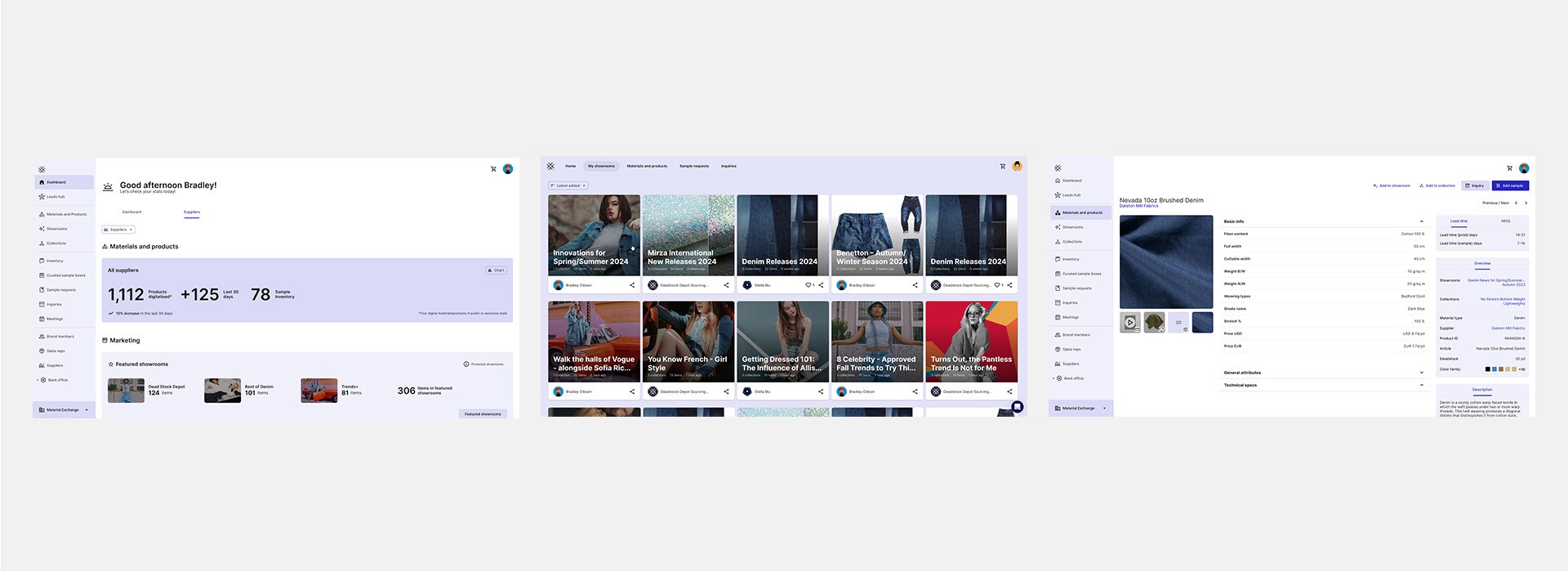
Digital Material Sourcing Platform

Transforming fragmented sourcing workflows into a centralized platform for brands, suppliers, and sales representatives. Over 2 years, I contributed to the design and evolution of an enterprise platform that streamlined material sourcing, improved collaboration, and digitized critical workflows across the fashion industry.

Outcomes

  • 30–40% increase in sales engagement

  • 25% growth in sample requests

  • 40% faster lead response times

  • 45% reduction in operational processing time

  • WCAG-compliant scalable Design System

Product Vision

The platform was designed as a centralized sourcing ecosystem connecting brands, suppliers, and sales representatives within a shared operational workflow.

The goal was to simplify material discovery, improve communication, reduce manual operations, and accelerate product development through digital collaboration tools.

Core capabilities

  • Advanced material discovery and filtering

  • Digital sample management

  • Inventory and lead management

  • Curated sourcing experiences

  • Real-time collaboration workflows

Product Vision

The platform was designed as a centralized sourcing ecosystem connecting brands, suppliers, and sales representatives within a shared operational workflow.

The goal was to simplify material discovery, improve communication, reduce manual operations, and accelerate product development through digital collaboration tools.

Core capabilities

  • Advanced material discovery and filtering

  • Digital sample management

  • Inventory and lead management

  • Curated sourcing experiences

  • Real-time collaboration workflows

My Role

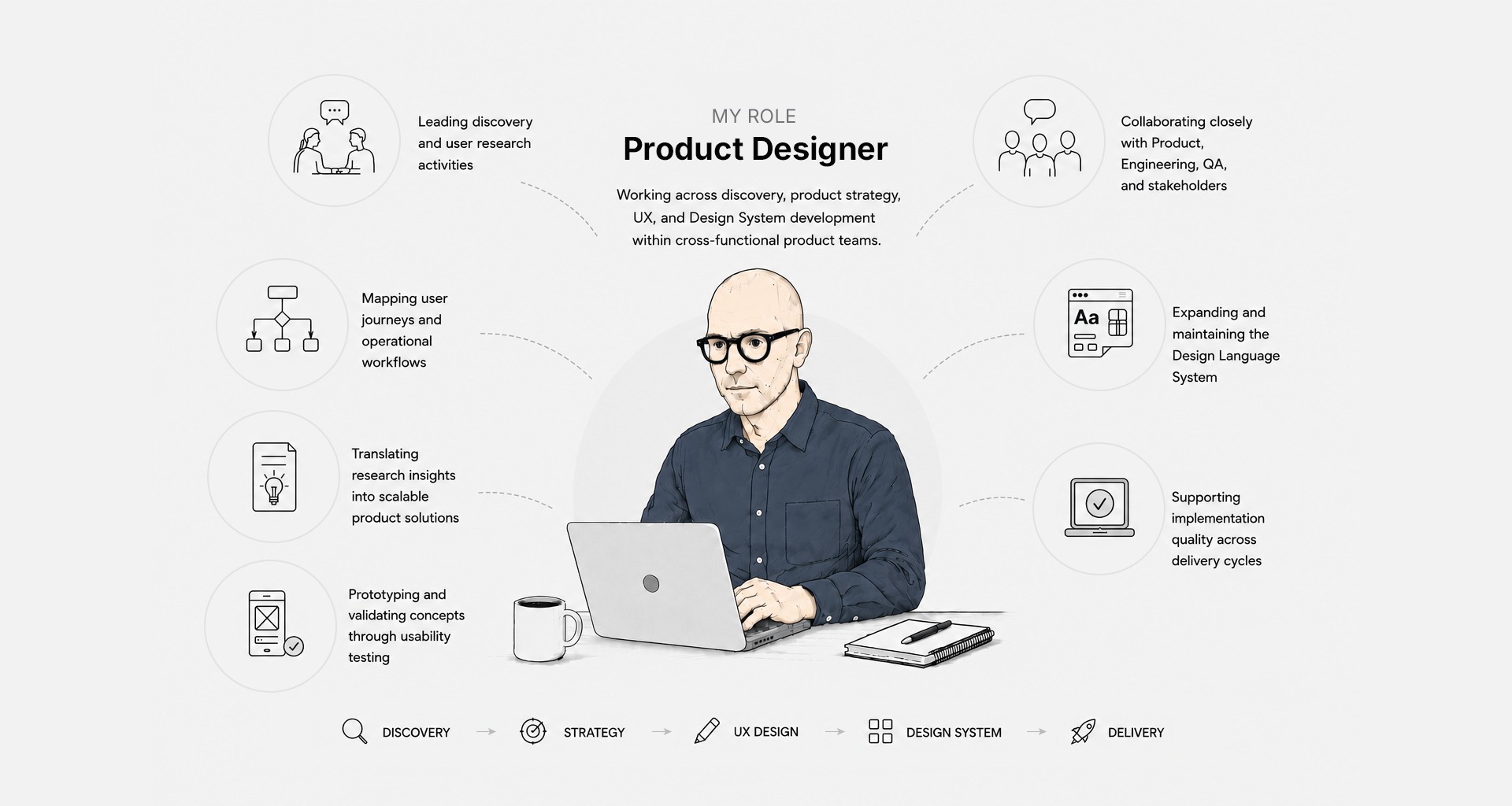
As a Product Designer, I worked across discovery, product strategy, UX, and Design System development within cross-functional product teams.

Responsibilities

  • Leading discovery and user research activities

  • Mapping user journeys and operational workflows

  • Translating research insights into scalable product solutions

  • Prototyping and validating concepts through usability testing

  • Collaborating closely with Product, Engineering, QA, and stakeholders

  • Expanding and maintaining the Design Language System

  • Supporting implementation quality across delivery cycles

My Role

As a Product Designer, I worked across discovery, product strategy, UX, and Design System development within cross-functional product teams.

Responsibilities

  • Leading discovery and user research activities

  • Mapping user journeys and operational workflows

  • Translating research insights into scalable product solutions

  • Prototyping and validating concepts through usability testing

  • Collaborating closely with Product, Engineering, QA, and stakeholders

  • Expanding and maintaining the Design Language System

  • Supporting implementation quality across delivery cycles

Discovery & Research

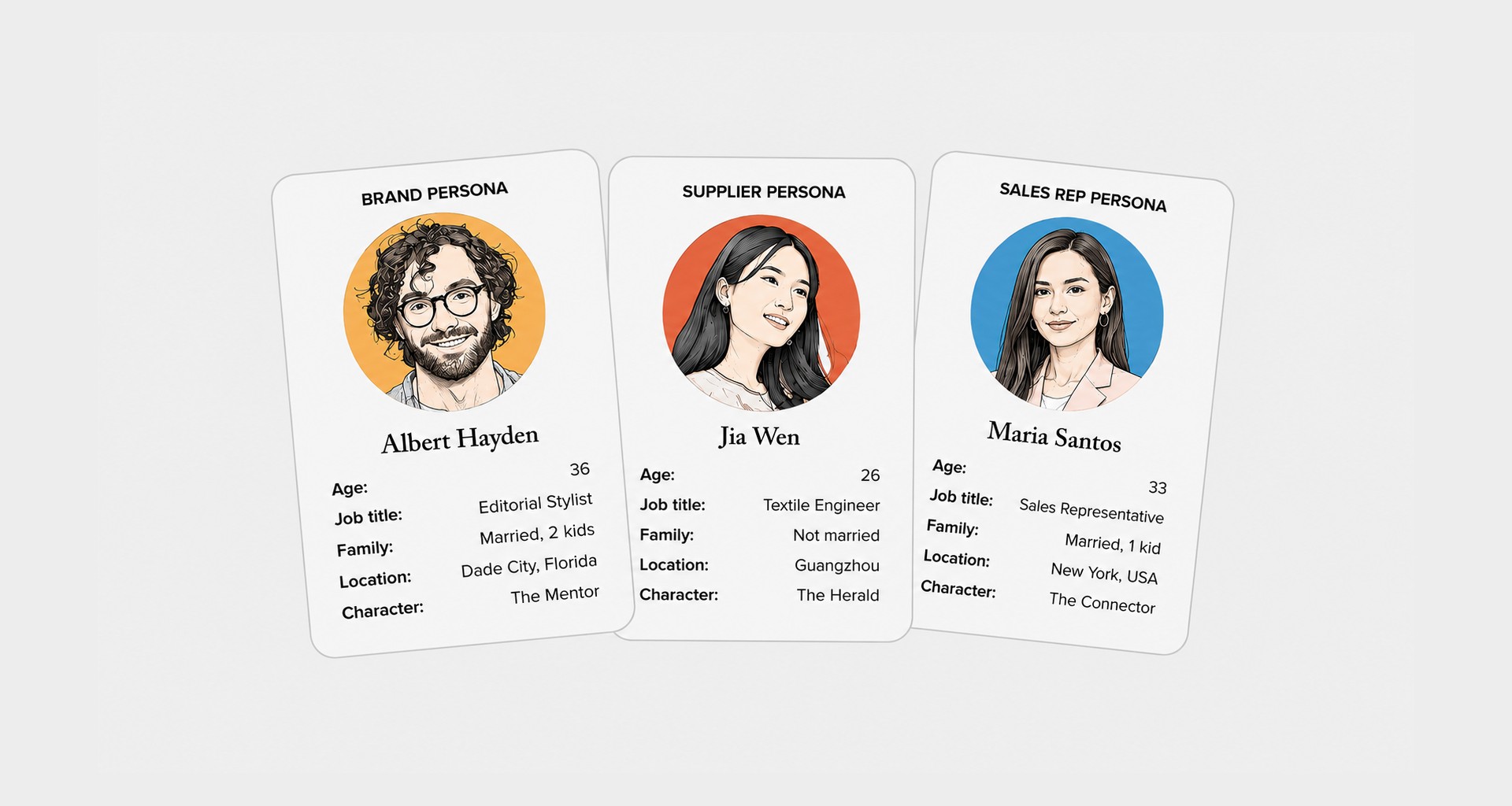
User interviews and workflow analysis revealed that sourcing decisions were slowed down by fragmented communication, inconsistent material data, and highly manual operational processes.

Different user groups shared a common need: visibility, speed, and centralized collaboration.

Research insights directly shaped the platform strategy and helped prioritize features with the highest operational impact. The process remained iterative throughout the product lifecycle, with concepts continuously validated through testing and user feedback.

Discovery & Research

User interviews and workflow analysis revealed that sourcing decisions were slowed down by fragmented communication, inconsistent material data, and highly manual operational processes.

Different user groups shared a common need: visibility, speed, and centralized collaboration.

Research insights directly shaped the platform strategy and helped prioritize features with the highest operational impact. The process remained iterative throughout the product lifecycle, with concepts continuously validated through testing and user feedback.

Core Product Initiatives

Materials & Product Discovery

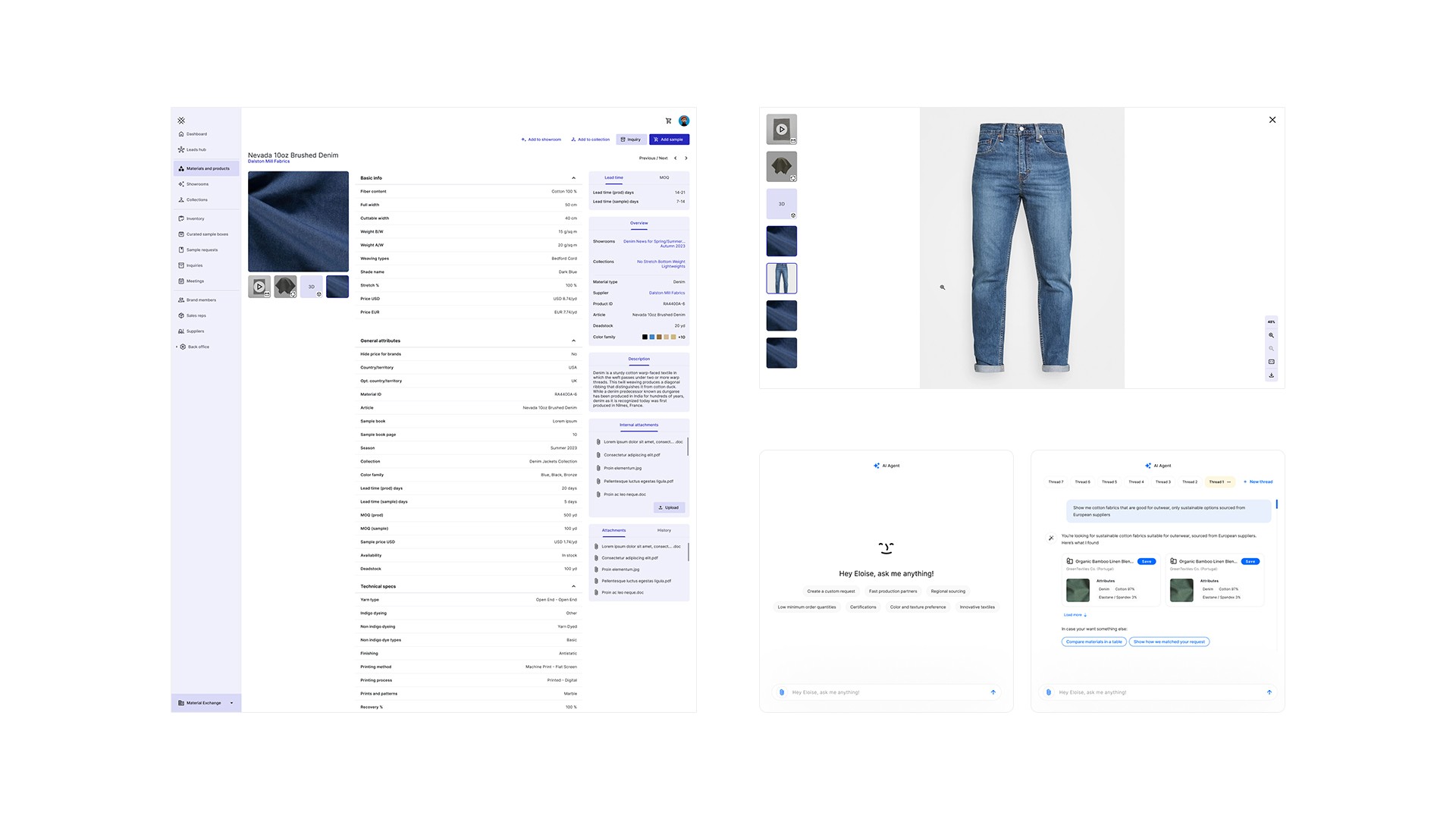
One of the biggest friction points for sales representatives was the inability to quickly evaluate materials with clients. The existing workflow relied on low-resolution imagery, inconsistent material data, and inefficient browsing experiences, slowing sourcing decisions and making presentations less effective during client interactions.

To improve material discovery, we redesigned the media browsing experience with enhanced image resolution, advanced filtering capabilities, and a quick-view mode that allowed users to review materials more efficiently without disrupting their workflow. The experience was designed to support faster evaluation and reduce friction during sourcing sessions.

As the platform evolved, AI-assisted search capabilities also became part of the exploration process, aiming to improve material discovery further through natural language and visual search patterns.

Outcomes

  • 30–40% increase in sales engagement

  • Faster material evaluation workflows

  • AI-assisted search exploration

Core Product Initiatives

Materials & Product Discovery

One of the biggest friction points for sales representatives was the inability to quickly evaluate materials with clients. The existing workflow relied on low-resolution imagery, inconsistent material data, and inefficient browsing experiences, slowing sourcing decisions and making presentations less effective during client interactions.

To improve material discovery, we redesigned the media browsing experience with enhanced image resolution, advanced filtering capabilities, and a quick-view mode that allowed users to review materials more efficiently without disrupting their workflow. The experience was designed to support faster evaluation and reduce friction during sourcing sessions.

As the platform evolved, AI-assisted search capabilities also became part of the exploration process, aiming to improve material discovery further through natural language and visual search patterns.

Outcomes

  • 30–40% increase in sales engagement

  • Faster material evaluation workflows

  • AI-assisted search exploration

Digital Sample Requests

Sample requests were previously managed through fragmented communication channels and manual tracking processes. Users had limited visibility into request status, which frequently caused delays, operational confusion, and inefficient collaboration between brands, suppliers, and sales representatives.

We introduced a fully digital sample request workflow with centralized tracking, notifications, and real-time updates. The new experience improved transparency throughout the process while reducing operational overhead connected to manual coordination.

The solution also created a more reliable framework for communication between stakeholders, helping users move faster through sourcing and product development workflows.

Outcomes

  • 25% increase in sample request volume

  • Improved collaboration between stakeholders

  • Higher transparency and user satisfaction

Curated Sample Boxes

Trade show operations relied heavily on manually managed sample box workflows, creating logistical challenges and limited visibility across the ordering and delivery process. The lack of transparency often resulted in operational inefficiencies and increased coordination effort for internal teams.

To address this, we designed a platform feature allowing users to order curated sample boxes directly through the product. The experience simplified the ordering workflow while improving operational visibility for both internal teams and end users.

The feature reduced friction around physical sample management and transformed what had previously been a highly manual operational process into a scalable digital workflow.

Outcomes

  • 45% reduction in processing time

  • 90% successful deliveries

  • Increased operational efficiency and user satisfaction

Inventory Management

Inventory management workflows were heavily dependent on spreadsheets and disconnected operational processes. This created inconsistencies in stock visibility, increased the risk of errors, and caused disruptions across sourcing operations.

To improve reliability and operational visibility, we introduced a centralized inventory management system with live updates, alerts, and streamlined tracking workflows. The solution reduced reliance on manual processes while helping teams coordinate inventory changes more efficiently across the platform.

The redesign improved operational consistency and reduced friction around inventory management activities.

Outcomes

  • 40% improvement in stock management workflows

  • Reduced operational disruptions

  • Improved visibility and coordination across teams


“Our stock management improved now by 40%”

Jacqueline Senecal, Business Development Associate

Leads Hub

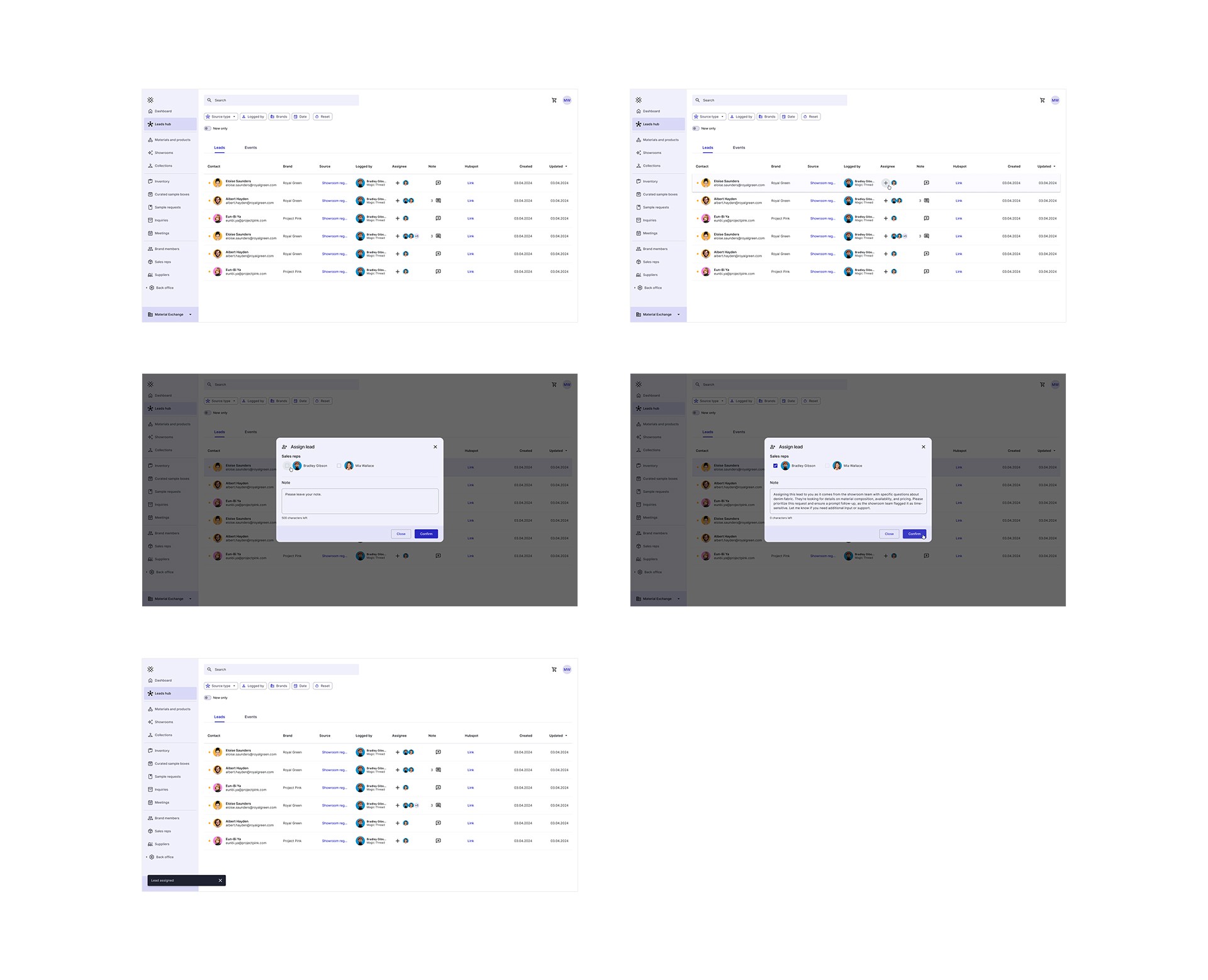
Sales representatives lacked a dedicated system for managing leads, assignments, and follow-up workflows. Important information was spread across multiple channels, leading to slower response times, inconsistent ownership, and missed opportunities.

We designed a collaborative Leads Hub that centralized lead management workflows into one operational space. The feature enabled teams to assign ownership, track progress, and improve communication around opportunities and client relationships.

By reducing fragmentation and improving visibility, the system helped teams respond faster and collaborate more effectively.

Outcomes

  • 40% faster response times

  • Improved lead conversion efficiency

  • Better collaboration and operational alignment
Design System

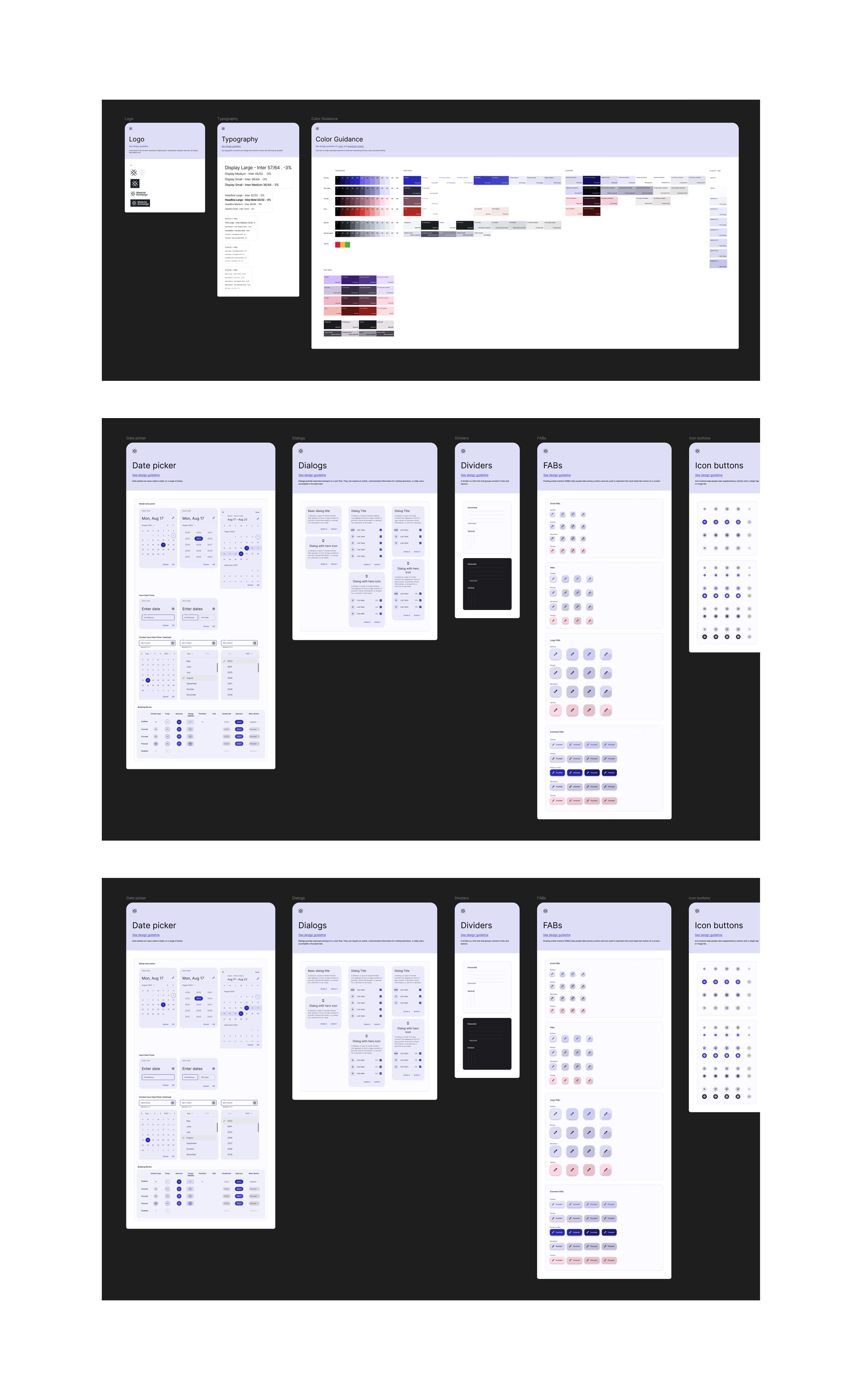
The platform’s Design Language System evolved from a small collection of atomic components into a scalable ecosystem supporting hundreds of reusable patterns, variants, and workflows across the product.

I contributed to maintaining and expanding the system through:

Component architecture

  • Variant management

  • Token structures

  • Variable implementation

  • Accessibility alignment with WCAG 2.1

  • Scaling Design System adoption across product teams and delivery processes

  • Strengthening the design-to-development workflow through tooling integration and shared system foundations

Outcomes

  • Increased Design System adoption across Product and Engineering teams

  • Improved design-to-development handoff and implementation consistency

  • Reduced duplication through reusable components, variants, and tokens

  • Supported accessibility compliance through alignment with WCAG 2.1 standards

  • Created a scalable foundation for future platform expansion

Design System

The platform’s Design Language System evolved from a small collection of atomic components into a scalable ecosystem supporting hundreds of reusable patterns, variants, and workflows across the product.

I contributed to maintaining and expanding the system through:

Component architecture

  • Variant management

  • Token structures

  • Variable implementation

  • Accessibility alignment with WCAG 2.1

  • Scaling Design System adoption across product teams and delivery processes

  • Strengthening the design-to-development workflow through tooling integration and shared system foundations

Outcomes

  • Increased Design System adoption across Product and Engineering teams

  • Improved design-to-development handoff and implementation consistency

  • Reduced duplication through reusable components, variants, and tokens

  • Supported accessibility compliance through alignment with WCAG 2.1 standards

  • Created a scalable foundation for future platform expansion

What Didn’t Work

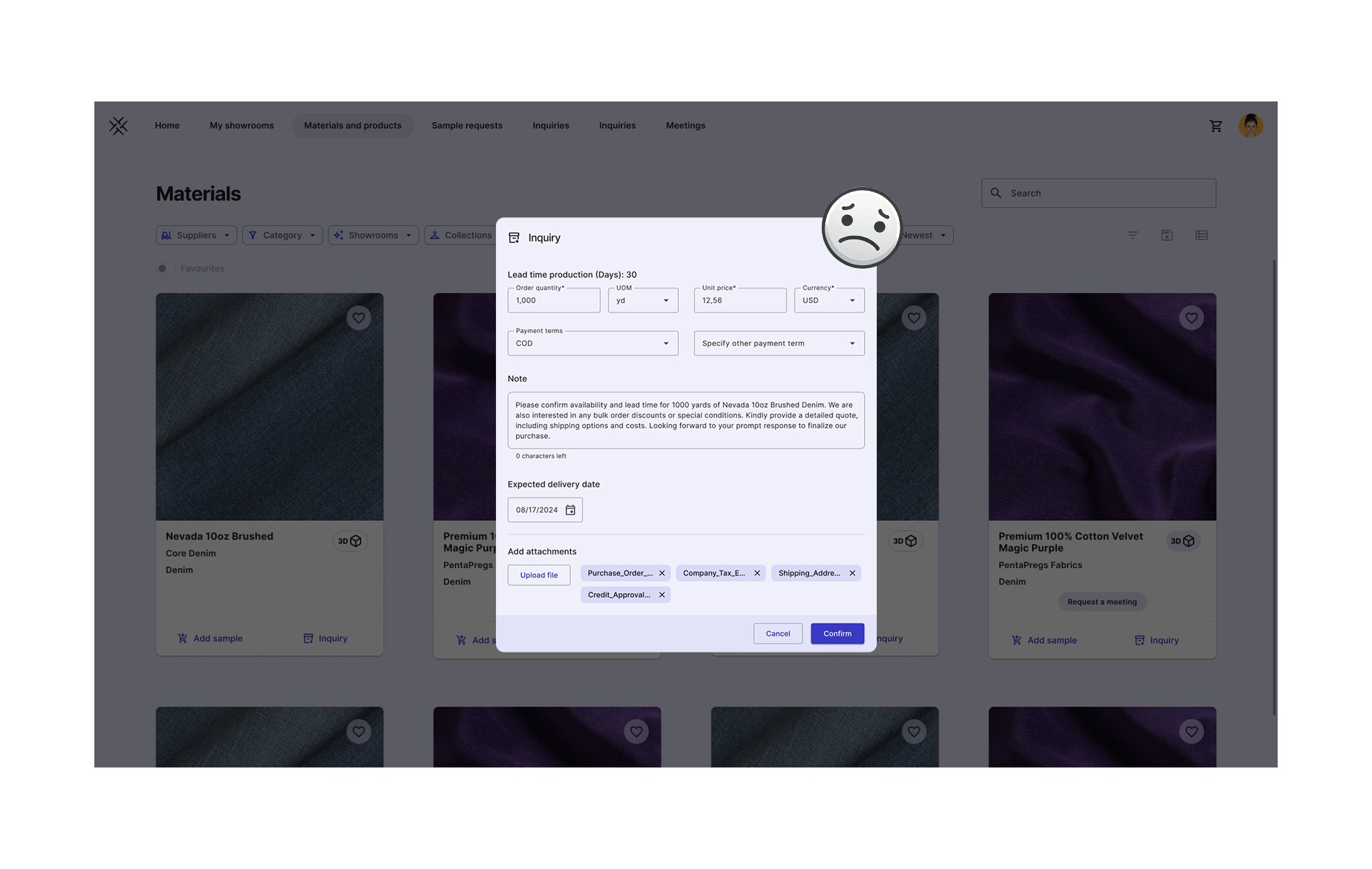
One initiative focused on digitizing large-scale material inquiries directly within the platform. The assumption was that brands would transition from sampling workflows into bulk purchasing flows.

Research and adoption data proved otherwise.

Users hesitated to place high-volume material orders digitally due to missing trust signals, operational risk, and established offline procurement habits. The feature ultimately reinforced an important insight: not every operational workflow is ready for full digital transformation.

What Didn’t Work

One initiative focused on digitizing large-scale material inquiries directly within the platform. The assumption was that brands would transition from sampling workflows into bulk purchasing flows.

Research and adoption data proved otherwise.

Users hesitated to place high-volume material orders digitally due to missing trust signals, operational risk, and established offline procurement habits. The feature ultimately reinforced an important insight: not every operational workflow is ready for full digital transformation.

Product Impact

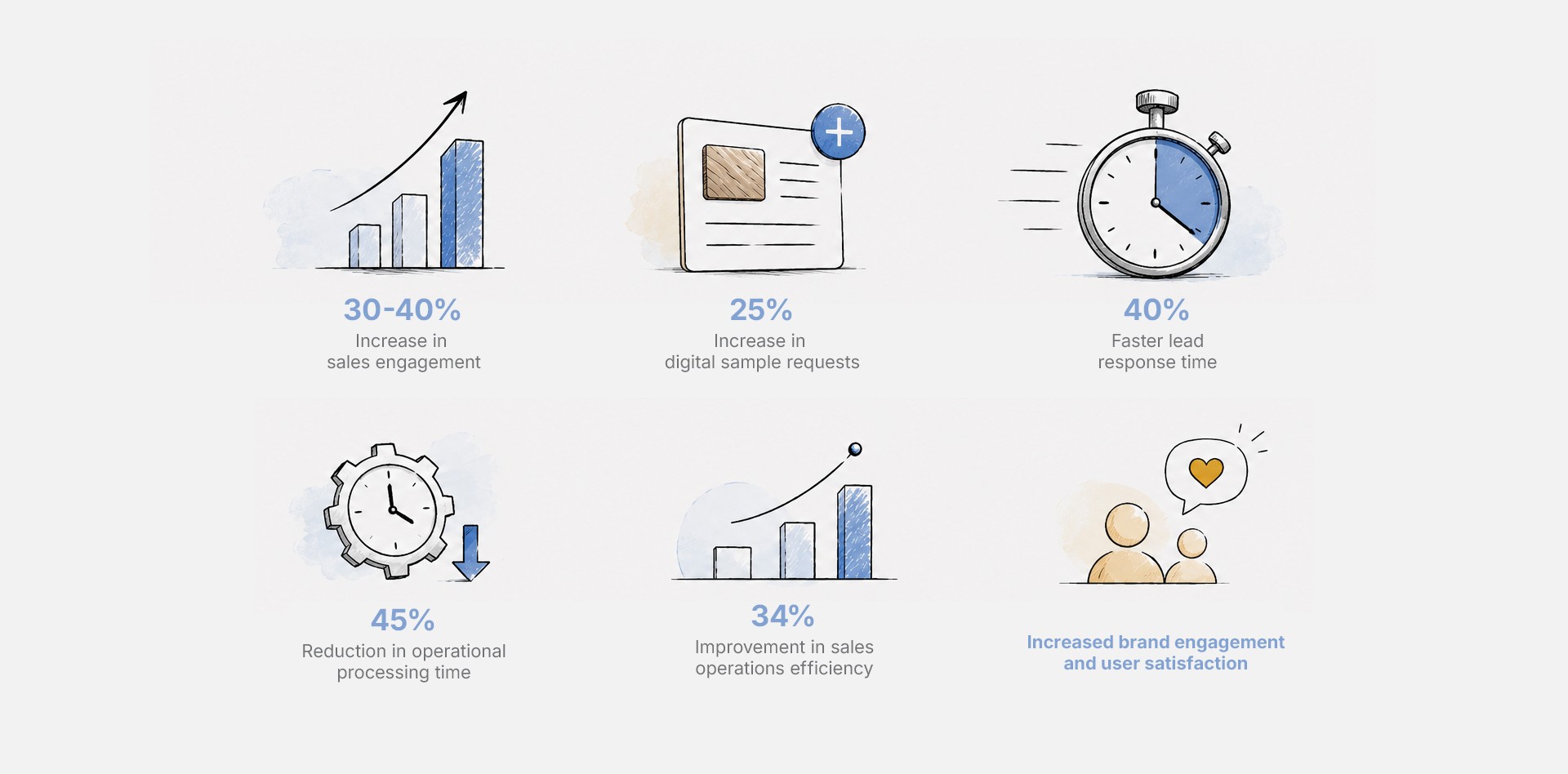
Together, these initiatives contributed to a more scalable sourcing ecosystem, helping users make faster decisions, collaborate more effectively, and reduce manual effort across critical workflows.


  • 30–40% increase in sales engagement

  • 25% increase in digital sample requests

  • 40% faster lead response times

  • 45% reduction in operational processing time

  • 34% improvement in sales operations efficiency

  • Increased brand engagement and user satisfaction

Product Impact

Together, these initiatives contributed to a more scalable sourcing ecosystem, helping users make faster decisions, collaborate more effectively, and reduce manual effort across critical workflows.


  • 30–40% increase in sales engagement

  • 25% increase in digital sample requests

  • 40% faster lead response times

  • 45% reduction in operational processing time

  • 34% improvement in sales operations efficiency

  • Increased brand engagement and user satisfaction

Reflection


Working on Material Exchange gave me a deeper understanding of how complex operational workflows shape product decisions. By working across sourcing, sampling, inventory management, and internal operations, I learned how to balance user needs with business requirements in a multi-sided platform.

The project reinforced the importance of research-driven decision making, validating assumptions early, and understanding that successful adoption depends as much on user trust and established behaviours as it does on the quality of the solution itself.

Reflection


Working on Material Exchange gave me a deeper understanding of how complex operational workflows shape product decisions. By working across sourcing, sampling, inventory management, and internal operations, I learned how to balance user needs with business requirements in a multi-sided platform.

The project reinforced the importance of research-driven decision making, validating assumptions early, and understanding that successful adoption depends as much on user trust and established behaviours as it does on the quality of the solution itself.